

Table of Contents
- Why Premium Canvas Costs More: The Real Factors
- Material Quality: Cotton Duck vs. Budget Alternatives
- The Canvas Giclée Printing Process and Ink Quality
- Solid Wood Stretcher Bars and Frame Construction
- Archival Quality Canvas Prints and Longevity
- Environmental Impact and Sustainable Production
- Comparing Price Points: What You Actually Get
- Conclusion
Last Updated: August 23, 2026
Why Premium Canvas Costs More: The Real Factors
When you're shopping for canvas prints, the price difference between budget options and premium alternatives can feel jarring. A £20 print from one supplier and a £69 print from another might look similar in thumbnail photos. But the moment you hang them side by side, the gap becomes obvious. One fades within months. The other stays vibrant for decades.
Premium canvas costs more because of four interconnected factors: material quality, printing technology, frame construction, and archival durability. These aren't marketing justifications, they're measurable differences in how the product is made and how long it lasts.
At paints2prints, we've analysed what separates prints that become treasured pieces from those that disappoint. The research is consistent: when you invest in premium canvas, you're paying for materials engineered to resist fading, inks formulated to last, and wood selected for stability. This guide breaks down exactly where that premium cost comes from, so you can make an informed decision about what's worth paying for.
The UK online art market generated revenue of USD 724.7 million in 2024 and is expected to grow at a CAGR of 6.9% from 2025 to 2033, reflecting growing demand for quality home art (vertexaisearch.cloud.google.com). But growth doesn't mean all options are equal. Understanding the cost drivers helps you spot genuine quality from clever marketing.
Material Quality: Cotton Duck vs. Budget Alternatives
Premium canvas starts with the fabric itself. The difference between cotton duck and synthetic blends isn't just about feel, it's about how the material behaves over time.
Cotton duck is a tightly woven fabric made from pure cotton fibres. The "duck" refers to the weave pattern, which creates exceptional tensile strength. When you examine premium cotton duck under magnification, you'll see consistent, tight weave tension that distributes stress evenly across the surface. Budget alternatives often use polyester or cotton-polyester blends where the weave is looser and more prone to sagging.
Here's the practical difference: premium cotton duck maintains dimensional stability. This means the canvas won't warp, stretch, or develop waves over time, even in fluctuating humidity. Budget synthetics absorb moisture differently, causing the substrate to expand and contract unevenly. Within a year or two, you'll see visible distortion, the edges might cup, or the centre might develop a slight dome.
Canvas produced from organic cotton commands premium pricing due to sustainable cultivation practices, with organic cotton representing 12.8% of the cotton canvas segment (6wresearch.com). This environmental consideration adds cost, but it also signals manufacturing rigour. Suppliers investing in certified organic supply chains typically maintain higher standards across all production stages.
The gsm (grams per square metre) weight also matters. Premium canvas typically measures 344gsm or higher, providing substantial body and resistance to cracking. Lighter canvas, often under 300gsm, feels flimsy and is more prone to surface damage. When you stretch lightweight canvas over a frame, the tension can cause micro-tears that spread over time.
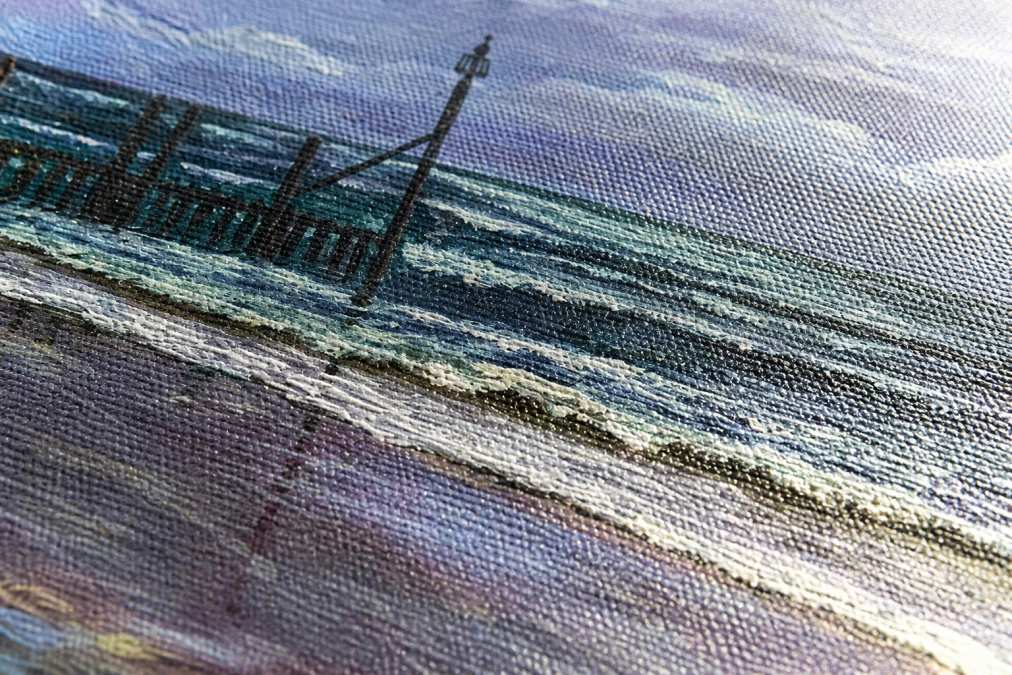
Synthetic canvas offers cost advantages of 25-45% lower pricing compared to cotton canvas due to petroleum-based feedstock availability and established manufacturing infrastructure (bonafideresearch.com). That's why budget suppliers favour it. But synthetics yellow under UV exposure and can develop a plastic-like appearance that looks cheap on your wall. Premium suppliers choose poly-cotton blends, typically 60% cotton, 40% polyester, that combine cotton's longevity with polyester's resistance to moisture.
The Canvas Giclée Printing Process and Ink Quality
The printing process separates premium canvas from budget alternatives more dramatically than almost any other factor.
Budget canvas prints typically use aqueous (water-based) inks applied through standard inkjet printing. These inks sit on top of the canvas surface rather than bonding with the fibres. Within months, especially in sunlit rooms, the colours fade noticeably. The inks also lack UV resistance, meaning sunlight actively degrades them.
Premium canvas uses pigment-based inks applied through giclée printing, a process where microscopic ink droplets are sprayed with precision onto the pre-primed canvas surface. The inks penetrate the canvas weave and bond with the substrate, creating a print that's literally part of the material rather than sitting on top of it.
Water-based HP Latex inks represent a significant step forward in durability. These inks cure through oxidation rather than evaporation, creating a more stable, long-lasting bond. They're also formulated with UV-resistant compounds that protect against fading. A print made with HP Latex inks can maintain colour vibrancy for 50+ years under normal indoor conditions.
The priming layer matters too. Premium canvas is primed with gesso, a coating that seals the weave and creates an ideal surface for ink adhesion. Gesso is typically acid-free, which prevents yellowing and degradation over time. Budget canvas skips this step or uses a thin, inferior primer that doesn't provide adequate protection.
Print resolution affects clarity and detail. Premium giclée printing achieves 1440 dpi or higher, producing sharp edges and smooth colour transitions. Budget inkjet printing often maxes out at 600-720 dpi, resulting in visible pixelation and colour banding, especially noticeable in gradient areas like skies.
According to research, stretched canvas panels represent 47.8% of global sales in 2025 and are expected to maintain dominance through 2034, with a forecast CAGR of 4.7%. Quality construction is increasingly central to buyer expectations. The printing process is where that expectation translates into tangible durability.
Solid Wood Stretcher Bars and Frame Construction
The frame holding your canvas is engineered infrastructure, not decoration. It determines whether your print stays flat and square or develops sagging and warping.
Premium stretcher bars are made from kiln-dried hardwood, typically poplar or pine that's been dried in a kiln to remove moisture and ensure dimensional stability. Kiln drying prevents the wood from absorbing humidity from the air, which would cause expansion and contraction. Budget stretcher bars are often air-dried softwood that continues to move throughout its life.
The joinery matters significantly. Premium stretchers use mortise-and-tenon joints or finger joints, interlocking connections that distribute stress evenly. These joints are glued and sometimes reinforced with corner blocks. Budget frames use simple butt joints held together with staples, which fail under the tension required to keep canvas properly stretched.
Wood thickness and depth affect performance. Premium stretcher bars are typically 3.2 cm deep and 2-3 cm thick, providing substantial structural support. This depth also creates the "floating" effect, the canvas appears to hover off the wall rather than lying flat against it. Budget stretchers are often thinner (1.5-2 cm), which looks cheap and provides less support for larger prints.
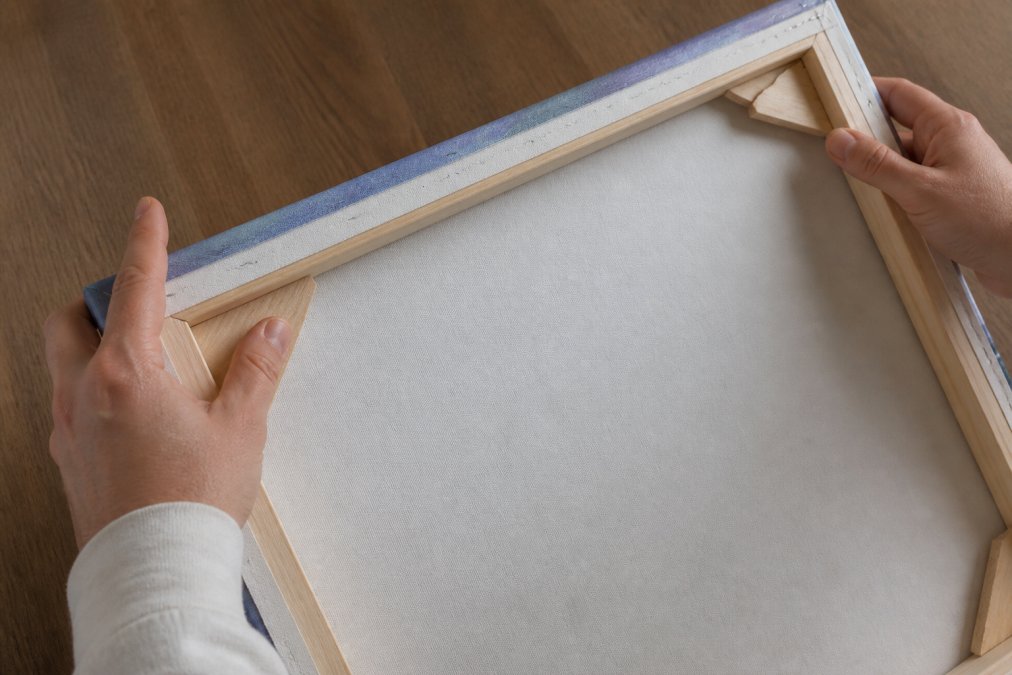
The corners are where structural failure typically begins. Premium frames include corner blocks, small triangular reinforcements glued and screwed at each corner, that prevent racking (the frame twisting out of square). Budget frames omit these, relying entirely on the joints to hold the frame true.
Wood sourcing adds cost. Premium suppliers source from renewable forests and select wood with tight grain and minimal knots. This costs more than using whatever softwood is cheapest. The investment pays off: a premium frame will remain square and stable for decades. Budget frames often develop visible gaps at the corners within a few years as the wood moves.
Archival Quality Canvas Prints and Longevity
Archival quality is a measurable standard, not marketing speak. It refers to materials and processes that preserve colour and integrity for 100+ years under museum conditions, or 50+ years under typical home conditions.
Archival canvas meets specific criteria: acid-free substrate, acid-free sizing, pigment-based inks, and UV-resistant coating. Each component matters. If your canvas contains acid, it will yellow and become brittle over time, a process that accelerates in heat and humidity.
The canvas weave itself contributes to longevity. Tight weave tension distributes stress evenly, preventing stress points where the material might crack or tear. Loose weaves develop weak spots that expand over time. This is why premium suppliers specify exact weave tension standards.
According to research on sustainable art supplies and environmental certifications, artists and consumers are increasingly prioritising eco-friendly products that signal manufacturing rigour. The manufacturing process directly impacts how long a print lasts. Suppliers investing in environmental standards typically maintain higher quality controls across all stages.
UV protection is critical in sunlit rooms. Premium canvas includes a UV-resistant topcoat, typically a matte or satin varnish that filters harmful wavelengths without yellowing. Budget prints have no protection, meaning sunlight actively fades them. A print in a sunny room without UV protection can fade 20-30% within 18 months.
Moisture resistance prevents mould and warping. Premium canvas is treated to resist moisture absorption, which is essential in bathrooms, kitchens, and humid climates. Budget canvas absorbs moisture readily, leading to mould growth and canvas degradation.
The combination of these factors creates a measurable difference in lifespan. A budget canvas print might look acceptable for 12-24 months. A a premium canvas print from paints2prints, made with poly-cotton blend fabric, HP Latex inks, and UV protection, will maintain colour and integrity for 50+ years.
Environmental Impact and Sustainable Production
The environmental cost of canvas production is often overlooked, but it directly influences price and quality.
Organic cotton production costs more than conventional cotton because it prohibits synthetic pesticides and fertilisers. However, organic cotton is more durable, the fibres are stronger because they're grown without chemical stress. This durability translates to longer-lasting canvas.
Manufacturing processes also matter. Premium suppliers use water-based inks and closed-loop production systems that recycle waste water. Budget suppliers often use solvent-based inks and dump waste directly, which is cheaper but environmentally destructive. The cost difference is passed to consumers: sustainable production costs more.
Stringent environmental regulations on manufacturing processes pose a major restraint for the canvas market, impacting production costs. Suppliers meeting these regulations, and exceeding them, invest in cleaner technology that costs more upfront but produces superior products.
Wood sourcing from renewable forests adds cost compared to harvesting old-growth or illegally logged timber. Premium stretcher bars come from certified sustainable sources. This certification adds 10-15% to wood costs but ensures the frame will last decades without environmental guilt.
Packaging and shipping also affect the environmental equation. Premium suppliers often use recycled cardboard and minimal plastic. Budget suppliers use cheap plastic bubble wrap and non-recyclable packaging. The environmental cost of that packaging is real, even if it's not reflected in the purchase price.
The shift towards accessible price segments in the art market reflects growing demand for sustainable options at lower price points. However, truly sustainable production, and the durability it enables, costs more than fast, cheap alternatives.
Comparing Price Points: What You Actually Get
The relationship between price and quality isn't linear. At certain price tiers, you're paying for measurable improvements. At others, you're paying for branding.
| Price Range | Canvas Type | Ink System | Stretcher Bars | Archival Rating | Expected Lifespan |
|---|---|---|---|---|---|
| Under £30 | Polyester blend, 200gsm | Budget aqueous, no UV protection | Softwood, butt joints | None | 12-18 months |
| £30-£50 | Cotton-polyester blend, 280gsm | Water-based, limited UV protection | Softwood, reinforced corners | Partial | 2-3 years |
| £50-£80 | Poly-cotton, 344gsm | HP Latex, full UV protection | Kiln-dried hardwood, mortise joints | Full archival | 50+ years |
| £80+ | Premium cotton, 380gsm+ | Professional pigment inks, enhanced UV | Premium hardwood, reinforced frame | Museum-grade | 100+ years |
At paints2prints, our canvas prints start at £59 for smaller sizes and reach £69 for larger formats. This pricing places us in the premium tier, the range where you're getting genuine archival quality, not just better marketing.
For £59-£69, you receive poly-cotton canvas (344gsm), HP Latex inks with UV protection, kiln-dried poplar stretcher bars, and full archival certification. This is the price point where quality becomes reliable. Below this, you're making trade-offs on durability. Above this, you're often paying for artist reputation or gallery branding rather than material improvements.
The common objection, "I can get canvas prints for £20 elsewhere", is true. You can. But you're not getting the same product. Budget prints fade noticeably within months in sunlit rooms. Premium prints maintain colour for decades. When you calculate the cost per year of display, premium canvas is often cheaper than replacing budget prints every couple of years.
Online retail channels for canvas fabrics are expanding at 12.3% compound annual growth from 2026 to 2034, significantly outpacing offline retail growth, with disproportionate growth in the high-margin premium segment. This suggests consumers increasingly understand the value of quality, they're willing to pay more for products that last.
Conclusion
Premium canvas costs more because every component, from the cotton weave to the ink formulation to the wood selection, is engineered for longevity. You're not paying for a brand or aesthetic preference. You're paying for materials and processes that preserve colour, resist fading, and remain structurally sound for decades.
The difference becomes obvious within months of hanging a print. Budget alternatives fade, warp, and deteriorate. Premium canvas from paints2prints maintains vibrant colour and structural integrity through years of display. With options like the Overstrand Beach: 'before the storm' Canvas Art print featuring UV-protected HP Latex inks on 344gsm poly-cotton canvas, you're investing in wall art that becomes more valuable as it ages, not less. Free shipping to the UK and EU means the premium quality arrives without additional cost.

=== FAQ ANSWERS (audit these too, same rules) ===
[1] Q: What makes premium canvas cost more than budget alternatives? A: Premium canvas uses higher-quality materials like poly-cotton blend canvas with tighter weave tension, acid-free substrates, and professional-grade inks. Budget options often use synthetic blends or lower thread count fabrics that fade faster and lack archival quality. Premium canvas also involves better stretcher bar construction from kiln-dried wood and UV-resistant coatings. These factors compound: a premium print from paints2prints uses 344gsm poly-cotton blend canvas with water-based HP Latex inks and UV protection on solid poplar wood frames, ensuring colours remain vibrant for decades rather than months.
[2] Q: Is archival quality canvas worth the extra cost? A: Yes, if you want your canvas to last. Archival quality canvas prints use acid-free materials, pigment-based inks, and UV-resistant coatings that prevent fading and yellowing. Budget canvas often uses dyes that fade within 2-5 years, especially in sunlight. Archival prints maintain colour vibrancy for 50+ years. The extra cost upfront saves you from replacing the print repeatedly. For homeowners investing in coastal or landscape art to personalise their space long-term, archival quality justifies the price difference.
[3] Q: Does canvas weight (gsm) really affect how much I should pay? A: Canvas weight matters significantly. Higher gsm (grams per square metre) indicates denser fabric with better tensile strength and durability. Premium canvas typically ranges 340-400gsm, while budget alternatives drop to 200-250gsm. Heavier canvas resists warping, cracking, and sagging over time, especially in varying humidity. It also holds ink better, producing richer colours and sharper detail. Paints2prints uses 344gsm canvas, which sits in the premium range and ensures your print won't sag or deteriorate as it ages.
[4] Q: What's the difference between hand-stretched and machine-stretched canvas? A: Hand-stretched canvas involves manually tensioning the fabric across stretcher bars to achieve even, consistent pressure. This prevents wrinkles and ensures the canvas stays taut over decades. Machine-stretched canvas uses automated tension, which is faster and cheaper but often produces uneven tension that leads to sagging or warping. Premium services use hand-stretching or precision tension monitoring. Paints2prints uses solid wooden stretcher frames with careful tensioning to maintain dimensional stability and prevent warp resistance issues common in cheaper alternatives.
Frequently Asked Questions
Q: What makes premium canvas cost more than budget alternatives?
A: Premium canvas uses higher-quality materials like poly-cotton blend canvas with tighter weave tension, acid-free substrates, and professional-grade inks. Budget options often use synthetic blends or lower thread count fabrics that fade faster and lack archival quality. Premium canvas also involves better stretcher bar construction from kiln-dried wood and UV-resistant coatings. These factors compound: a premium print from paints2prints uses 344gsm poly-cotton blend canvas with water-based HP Latex inks and UV protection on solid poplar wood frames, ensuring colours remain vibrant for decades rather than months.
Q: Is archival quality canvas worth the extra cost?
A: Yes, if you want your canvas to last. Archival quality canvas prints use acid-free materials, pigment-based inks, and UV-resistant coatings that prevent fading and yellowing. Budget canvas often uses dyes that fade within 2-5 years, especially in sunlight. Archival prints maintain colour vibrancy for 50+ years. The extra cost upfront saves you from replacing the print repeatedly. For homeowners investing in coastal or landscape art to personalise their space long-term, archival quality justifies the price difference.
Q: Does canvas weight (gsm) really affect how much I should pay?
A: Canvas weight matters significantly. Higher gsm (grams per square metre) indicates denser fabric with better tensile strength and durability. Premium canvas typically ranges 340-400gsm, while budget alternatives drop to 200-250gsm. Heavier canvas resists warping, cracking, and sagging over time, especially in varying humidity. It also holds ink better, producing richer colours and sharper detail. Paints2prints uses 344gsm canvas, which sits in the premium range and ensures your print won't sag or deteriorate as it ages.
Q: What's the difference between hand-stretched and machine-stretched canvas?
A: Hand-stretched canvas involves manually tensioning the fabric across stretcher bars to achieve even, consistent pressure. This prevents wrinkles and ensures the canvas stays taut over decades. Machine-stretched canvas uses automated tension, which is faster and cheaper but often produces uneven tension that leads to sagging or warping. Premium services use hand-stretching or precision tension monitoring. Paints2prints uses solid wooden stretcher frames with careful tensioning to maintain dimensional stability and prevent warp resistance issues common in cheaper alternatives.
This article was written using GrandRanker
0 comments