

Table of Contents
- Framed vs Unframed Canvas Prints: Key Differences
- Comparison Table: Framed and Unframed Canvas at a Glance
- Aesthetic Appeal and Interior Design Impact
- Durability, Protection, and Longevity
- Cost Considerations and Budget Impact
- How to Hang Unframed Canvas Prints and Installation Requirements
- Understanding Gallery Wrapped Canvas Meaning and Floating Frames
- Weight, Wall Structural Requirements, and Safety
Last Updated: August 8, 2026
Framed vs Unframed Canvas Prints: Key Differences
When choosing canvas wall art, the decision between framed and unframed prints fundamentally changes how your space feels and performs. Framed canvas prints feature a protective border (typically wood or metal) surrounding the canvas edges, creating a defined, gallery-style finish. Unframed canvas prints, also called gallery-wrapped canvas, stretch the printed fabric directly over wooden stretcher bars, displaying the image all the way to the edges without an outer frame. The choice affects durability, installation, cost, and visual impact.
The core difference lies in edge protection, visual weight, and installation complexity. Framed prints shield canvas edges entirely and add architectural presence. Unframed prints create a seamless, contemporary aesthetic and demand less wall space. Understanding these trade-offs helps you choose the finish that suits your room, décor style, and practical needs.
Comparison Table: Framed and Unframed Canvas at a Glance
| Feature | Framed Canvas | Unframed Canvas | Winner |
|---|---|---|---|
| Edge Protection | Full coverage | Exposed edges | Framed |
| Visual Style | Traditional, defined | Modern, seamless | Depends on décor |
| Wall Space Required | More (frame adds width) | Less | Unframed |
| Installation | Hanging hardware included | Requires wall hooks/nails | Framed (easier) |
| Perceived Value | Premium, gallery-like | Contemporary, minimalist | Framed (for formal spaces) |
| Weight | Heavier (frame adds mass) | Lighter | Unframed |
| Price | Higher starting point | Lower entry cost | Unframed |
| Dust Accumulation | Less (frame seals edges) | More (edges exposed) | Framed |
| Durability | Very high (protected) | Good (depends on inks) | Framed |
| Best For | Formal rooms, traditional décor | Modern spaces, renters | Depends on style |
Aesthetic Appeal and Interior Design Impact
The visual difference between framed and unframed canvas prints shapes how a room feels.

Framed canvas prints create a statement piece that commands attention. The frame acts as a visual anchor, drawing your eye and establishing a focal point. This works particularly well in traditional, eclectic, or formal interior design schemes where you want art to feel intentional and curated. For living rooms, dining areas, or bedrooms with established décor themes, a framed finish often feels more cohesive because it echoes other design elements like furniture frames or mirror borders.
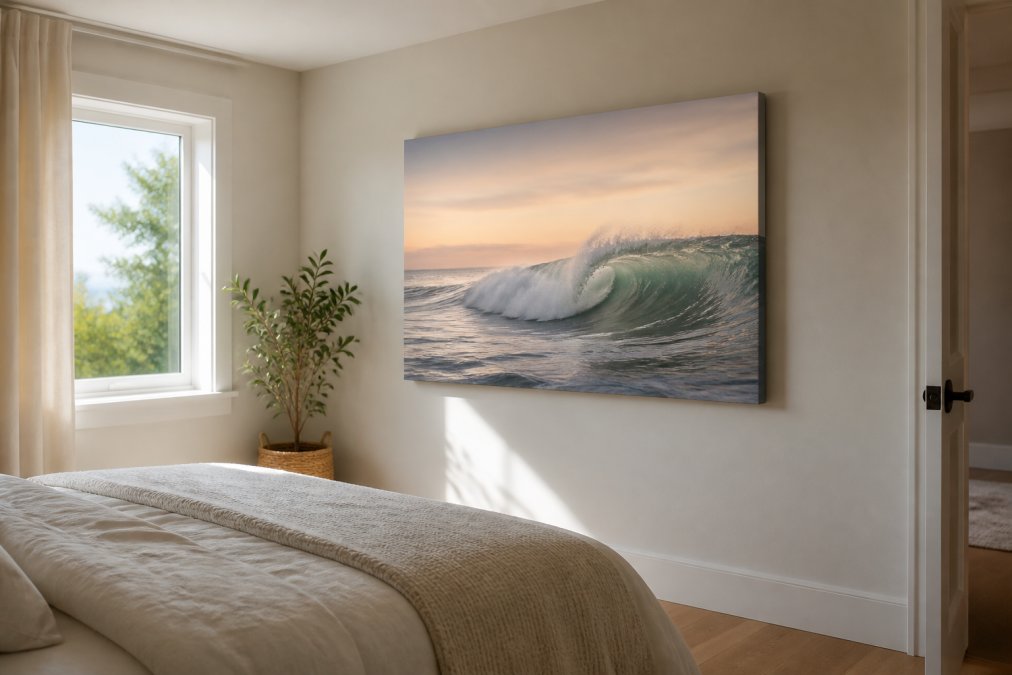
Unframed, gallery-wrapped canvas prints deliver a cleaner, minimalist aesthetic. Because the image wraps around the stretcher bars, there's no visual interruption. This approach suits contemporary, Scandinavian, or modern coastal design styles beautifully and works especially well in smaller spaces. Framed prints feel more formal and gallery-like, whilst unframed prints feel more casual and personal, making them ideal for renters or anyone wanting flexibility.
Durability, Protection, and Longevity
Canvas durability depends on materials, inks, and how well edges are protected from dust, moisture, and handling.
Unframed canvas prints use poly-cotton blend canvas with UV-resistant inks. Without a frame, canvas edges remain exposed to dust accumulation and potential damage if moved or bumped. However, the print quality remains excellent with quality materials.
Framed canvas prints add a protective layer that shields the entire artwork from environmental exposure. The frame seals edges, preventing dust from settling on canvas sides and reducing damage risk.
For homes with pets, children, or high-traffic areas, framed canvas prints offer superior protection. In stable environments like bedrooms, unframed prints perform well. The real durability difference emerges over 10+ years: framed prints maintain appearance far better, whilst unframed prints may show edge wear despite quality original materials.
Cost Considerations and Budget Impact
Price often determines the choice, and the difference between framed and unframed options can be substantial.
Unframed canvas prints start lower in price. At paints2prints, our unframed coastal and landscape prints begin at £69.00, offering excellent value for homeowners on a budget. This entry-level pricing makes unframed prints accessible for anyone decorating new spaces or experimenting with larger wall art.
Framed canvas prints cost significantly more because the frame adds material, labour, and protection value. Depending on frame style, wood type, and finish, a framed version can cost 40-80% more than its unframed counterpart. This premium reflects genuine added value: edge protection, archival longevity, and gallery-ready presentation.
Consider the full cost of ownership. An unframed print might cost less upfront, but professional framing later often costs more than buying a pre-framed option. Conversely, if you want flexibility to change décor or move artwork frequently, unframed prints make sense. At paints2prints, we offer both options at different price points with free shipping to the U.K. and E.U., so you're choosing based on actual needs rather than shipping costs.
How to Hang Unframed Canvas Prints and Installation Requirements
Installing unframed canvas prints is straightforward but requires the right approach to ensure secure, intentional hanging.
Unframed canvas prints hang using standard wall hooks or picture nails. Here's the practical process:
-
Locate the hanging points. Most unframed canvas prints have two D-rings roughly one-third down from the top, distributing weight evenly and preventing tilting.
-
Find your wall studs. Use a stud finder to locate wooden studs. Hanging from studs provides the most secure installation, especially for larger prints. Heavy-duty drywall anchors work well for medium-sized canvases if studs don't align.
-
Install hooks or nails. Hammer picture hooks into the wall at correct height and spacing, aligned with the D-rings. Leave roughly 2-3mm gap between hook and wall.
-
Hang and level. Carefully position the canvas on hooks and use a spirit level to ensure it hangs straight.
-
Check stability. Gently push the canvas to confirm it's secure and doesn't shift.
The entire process typically takes 10-15 minutes. Unlike framed prints with built-in systems, unframed prints require you to assess your wall type and choose appropriate hardware, giving you flexibility but demanding more decision-making upfront.
For renters, unframed canvas prints are often preferable because installation is reversible. Standard picture hooks leave minimal wall damage, making them ideal for temporary spaces or anyone hesitant about permanent modifications.
Understanding Gallery Wrapped Canvas Meaning and Floating Frames
Two terms often appear in canvas discussions: gallery-wrapped and floating frames.
Gallery-wrapped canvas means the printed canvas stretches around wooden stretcher bars, with the image continuing onto the edges. This creates a seamless, three-dimensional appearance popular in contemporary interior design. The edges show either a continuation of the image or a solid colour matching the dominant print colour.
What Is a Floating Frame for Canvas?
A floating frame is a thin, usually metal or minimalist wooden frame that sits slightly away from the canvas surface, creating visual separation without bulk. The frame doesn't touch the canvas edges; a small gap (typically 5-10mm) makes the canvas appear to "float" within the frame opening, creating visual depth and gallery-quality presentation whilst maintaining contemporary aesthetics.
Floating frames are ideal for homeowners wanting protection and finished appearance whilst preferring the clean aesthetic of gallery-wrapped canvas. They work beautifully with landscape and coastal prints and typically cost more than traditional frames but less than heavy, ornate wooden frames.
Weight, Wall Structural Requirements, and Safety
Canvas weight matters significantly, especially for larger prints or renters concerned about wall damage.
Unframed canvas prints are significantly lighter than framed versions. A typical 60x80cm unframed canvas weighs 1.5-2.5kg, meaning standard picture hooks rated for 5-10kg easily support them. You can hang unframed canvas in virtually any wall type with appropriate anchors.
Framed canvas prints are heavier because the frame adds substantial mass. A 60x80cm framed print can weigh 4-6kg or more. This extra weight requires stronger wall anchors and careful installation. For very large framed prints, professional installation is often recommended.
In modern homes with plasterboard walls, standard heavy-duty drywall anchors support most canvas weights. In older properties with solid brick or lath-and-plaster walls, installation is often easier. Renters should check tenancy agreements before installing anything permanent; many permit picture hooks but prohibit drilling.
For renters, unframed canvas prints offer distinct advantages: they're light enough for removable picture hooks, require no drilling, and leave minimal wall damage when removed. Always consider wall condition; damp walls or areas prone to moisture require additional care, and avoid hanging artwork directly above radiators.
How to Choose: Matching Canvas Finish to Your Room and Décor
The right choice depends on your interior design style, room function, and practical constraints.
Choose framed canvas if:
- Your room has traditional, eclectic, or formal décor where defined visual boundaries feel natural
- You want maximum edge protection and long-term durability
- You're decorating formal spaces (dining room, study, formal living room) where gallery-quality presentation matters
- You prefer not to worry about dust accumulation or edge wear
- You have pets or children in high-traffic areas
- You want artwork to feel like a curated, intentional investment
Choose unframed canvas if:
- Your room has contemporary, minimalist, or modern coastal décor
- You're a renter or prefer reversible wall modifications
- You want to save on upfront costs or furnish multiple rooms
- You prefer the seamless, floating aesthetic unframed prints create
- You have limited wall space and want artwork that doesn't add visual bulk
- You're decorating a bedroom, personal studio, or informal living space
At paints2prints, our coastal and landscape prints work beautifully in both formats. The choice often comes down to whether you want your art to feel like a gallery piece (framed) or a contemporary statement (unframed). Consider your room's existing colour palette, furniture style, and how you want the artwork to interact with surrounding space.
For first-time buyers uncertain about preference, starting with an unframed print lets you test size, colours, and placement before committing to a framed version. Our customisable sizes and free shipping to the U.K. and E.U. make this approach practical.
Choosing between framed and unframed canvas prints shapes how your walls look and how you experience your home. paints2prints offers both options across our curated collection of coastal and landscape prints, with customisable sizes and free shipping to the U.K. and E.U. Start with our Cornish Coast: Ocean Art Canvas Print or Breaking Wave Ocean Wave Canvas Print to see which finish suits your space, both available framed or unframed at £69.00.


Frequently Asked Questions
What is the main difference between framed and unframed canvas prints?
Framed canvas prints have a border frame (wood or metal) around the edges, offering edge protection and a finished gallery-style look. Unframed canvas prints are stretched directly onto wooden bars without a visible frame border, creating a clean, minimalist aesthetic. Framed options typically cost more but provide additional durability and a more traditional presentation, while unframed prints offer modern appeal and lower cost but require more careful handling.
How do I hang unframed canvas prints safely on my walls?
Unframed canvas prints require proper wall anchors or picture hooks rated for their weight. For most standard canvases, use heavy-duty picture hangers or wall plugs suitable for your wall type (plasterboard, brick, or stone). Mount the hanging hardware at least 30cm from the top edge of the canvas. For renters, adhesive strips designed for canvas (rated for the weight) offer a non-permanent option. Always check the weight of your specific print and ensure your wall can support it before installation.
Are framed canvas prints more durable than unframed ones?
Framed canvas prints offer better edge protection and dust resistance due to the frame border, which shields the canvas edges from damage and dust accumulation. Unframed prints are more vulnerable to edge wear and environmental dust but remain durable if hung away from high-traffic areas and direct sunlight. Both types use archival-quality inks and poly-cotton canvas that resist fading. Proper placement and care matter more than the frame choice for long-term durability.
What does gallery-wrapped canvas mean and how does it differ from a floating frame?
Gallery-wrapped canvas means the image wraps around the wooden frame edges, creating a seamless, dimensional look without a separate frame border. A floating frame, by contrast, is a separate frame that sits away from the canvas edges, creating a visible gap that enhances the three-dimensional effect. Floating frames work with either wrapped or traditional canvases and add a premium, contemporary aesthetic. Gallery-wrapped canvases alone offer a modern, minimalist look, while floating frames provide extra visual depth and a statement-piece quality.
Is an unframed canvas print suitable for renters?
Yes, unframed canvas prints are ideal for renters because they use simple hanging hardware that leaves minimal wall damage. Adhesive strips rated for canvas weight offer a completely non-permanent option that leaves no marks when removed properly. Unframed prints also make it easier to take your art with you when you move. Since renters often prefer non-permanent décor solutions, unframed canvas offers flexibility without the commitment of a framed piece.
This article was written using GrandRanker
0 comments