

Table of Contents
- Why Explore Landscape Art Alternatives
- Contemporary Landscape Painters in the UK
- Seascapes and Coastal Themes: Beyond the Traditional
- How to Choose Art for Your Home
- Buy Original Landscape Art Online: What You Need to Know
- Canvas Prints vs Fine Art Prints: Quality and Value
- Price Points and Accessibility in Landscape Art
- Conclusion
Last Updated: August 14, 2026
Why Explore Landscape Art Alternatives
When searching for landscape art alternatives, you're looking beyond familiar names to find something matching your space, budget, and aesthetic. The landscape art market has expanded dramatically, offering homeowners far more choice than ever before. Understanding what's available helps you make a decision that truly fits your home.
paints2prints has curated landscape art options for homeowners across the UK and EU, and we've seen firsthand how the right piece transforms a room. This guide explores genuine alternatives to established galleries, breaking down artistic styles, price points, and what matters when choosing landscape art for your walls.
The Art Fund's guide to collecting contemporary art offers insight into how collectors approach building their collections, which applies equally to homeowners selecting pieces for their living spaces. The landscape art space includes everything from traditional oil paintings to modern digital prints, each with distinct characteristics and value propositions.
Contemporary Landscape Painters in the UK
The contemporary landscape painting scene in the UK is remarkably diverse. Many homeowners now explore emerging and mid-career artists who bring fresh perspectives to coastal scenery, rural views, and abstract interpretations of nature.
Contemporary landscape painters often experiment with colour palettes that move beyond photorealism. Some favour bold, vibrant hues capturing emotional intensity; others pursue minimalist approaches, stripping landscapes down to essential forms and tones. Many focus on specific geographic regions, bringing authentic local knowledge to their work. A painter based on the Cornish coast, for example, captures the particular quality of light and water movement with intimacy that comes from repeated observation.

Emerging landscape painters often price their work more accessibly than established gallery names, partly because they're building their reputation and partly because they operate with lower overhead. You'll find original paintings and limited edition prints at various price points. One advantage of exploring contemporary artists directly is that many sell through their own websites or specialist online platforms, removing gallery markup so more of your money goes directly to the artist.
Seascapes and Coastal Themes: Beyond the Traditional
Seascapes and coastal themes dominate landscape art, and the genre has evolved considerably. Traditional approaches focused on photorealistic representation, while contemporary seascapes often prioritize emotional storytelling or abstract interpretation.
Some artists explore the drama of stormy seas using turbulent brushwork and dark colour palettes. Others focus on the stillness of dawn or dusk, when light transforms water into something ethereal. A third approach abstracts the seascape entirely, reducing waves and shoreline to geometric forms and colour relationships that suggest rather than depict a coastal scene.
Maritime themes extend beyond literal seascapes. Some artists incorporate boats, lighthouses, or coastal structures as focal points; others focus on the intersection of land and water, exploring how geology and tidal forces shape the coastline. Research suggests that images of water and natural shorelines have a calming influence on viewers, making them particularly suitable for bedrooms and living spaces where you want to create a tranquil atmosphere.
When evaluating seascape art, pay attention to how the artist handles light. The quality of light reflected in water is what often makes a seascape compelling. An artist who understands how light behaves on water, how it breaks into fragments, how it shifts with time of day, will create work that feels authentic even if it's not photorealistic.
How to Choose Art for Your Home
Selecting landscape art for your home requires balancing several factors: the room's existing colour palette, the wall space available, the mood you want to create, and your budget.
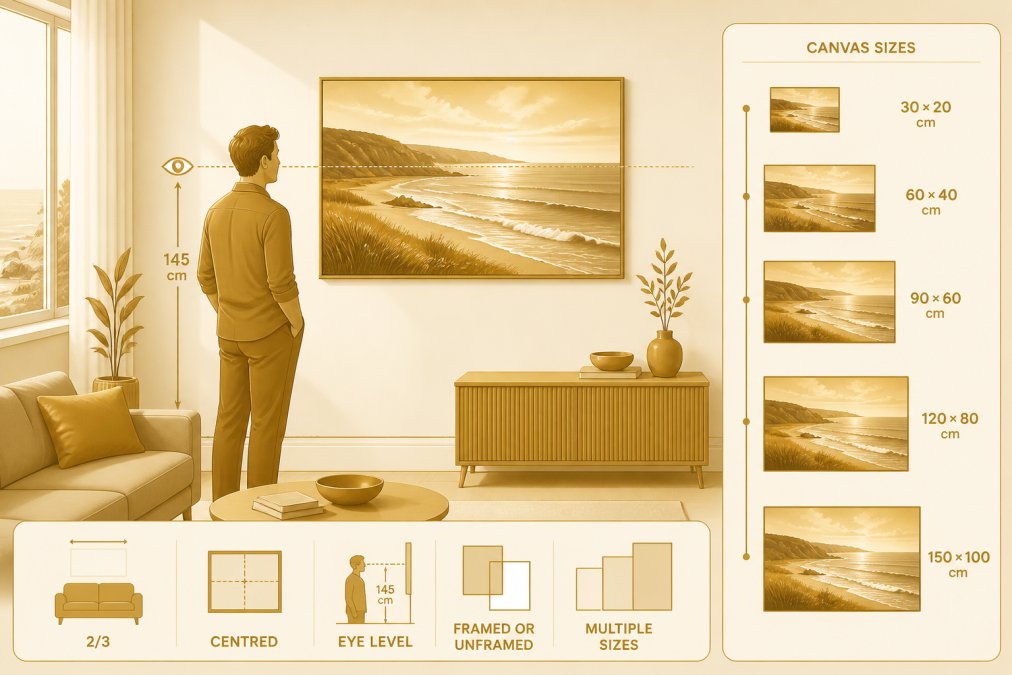
First, assess your wall. Measure the available space carefully, accounting for furniture placement and sight lines. A general guideline is that artwork should occupy roughly one-third to one-half of the wall space above furniture. For a sofa, the artwork should be centred with the bottom edge roughly 15-20 centimetres above the furniture.
Next, consider colour harmony. Look at your room's existing palette, wall colours, upholstery, flooring. Does the landscape art complement or contrast with these colours? Some homeowners prefer pieces that blend seamlessly; others deliberately choose artwork that introduces a new accent colour.
The artistic medium matters practically as well as aesthetically. Canvas prints offer durability and a finished appearance without requiring framing. Original paintings create texture and depth that prints cannot replicate, but they're generally more expensive. Fine art prints on paper offer a refined aesthetic but require framing and careful handling.
Consider the room's function and lighting. A bedroom benefits from calming, introspective landscape work, perhaps a misty moorland or quiet estuary scene. A living room might accommodate bolder, more dynamic compositions. Natural light affects how colours appear; north-facing walls receive cooler light, while south-facing walls receive warmer light.
Your budget influences not just the price you pay but also the type of artwork available. Original paintings command premium prices. Limited edition fine art prints cost less than originals but more than open-edition prints. Canvas prints offer the most accessible entry point, allowing you to experiment with different styles and sizes without major financial commitment.
Buy Original Landscape Art Online: What You Need to Know
Purchasing landscape art online requires understanding how online art retailers operate. High-resolution photographs should show the artwork's actual colours, texture, and finish. Many retailers now offer zoom functions that let you examine detail closely. Reputable retailers provide detailed product descriptions mentioning the medium, dimensions, framing options, and material specifications.
Shipping and handling concerns many online art buyers. Canvas prints arrive rolled or in protective packaging; fine art prints come flat in tubes or boxes. Most online retailers offer tracked shipping, and many provide insurance for high-value pieces. paints2prints offers free shipping on all orders to the UK and EU, eliminating this variable cost and making budgeting simpler.
Return policies matter significantly when buying art online. You cannot fully assess how a piece works in your space until it arrives and you see it on your wall. Reputable retailers offer return windows, typically 14-30 days, allowing you to return pieces that don't suit your space.
Customisation options are increasingly common. Many online retailers allow you to choose frame style, mat colour, print size, and finish (glossy, matte, or satin). This flexibility means you can tailor a piece to match your décor precisely.
Consumer Rights Act guidance on online purchases outlines your legal protections when buying art online, including distance selling regulations that require clear product information and return rights.
Authentication and provenance matter more for original artworks and limited editions than for prints. When purchasing an original painting or numbered limited edition print, verify that you receive a certificate of authenticity or edition documentation.
Canvas Prints vs Fine Art Prints: Quality and Value
The difference between canvas prints and fine art prints extends beyond aesthetics to durability, maintenance, and cost.
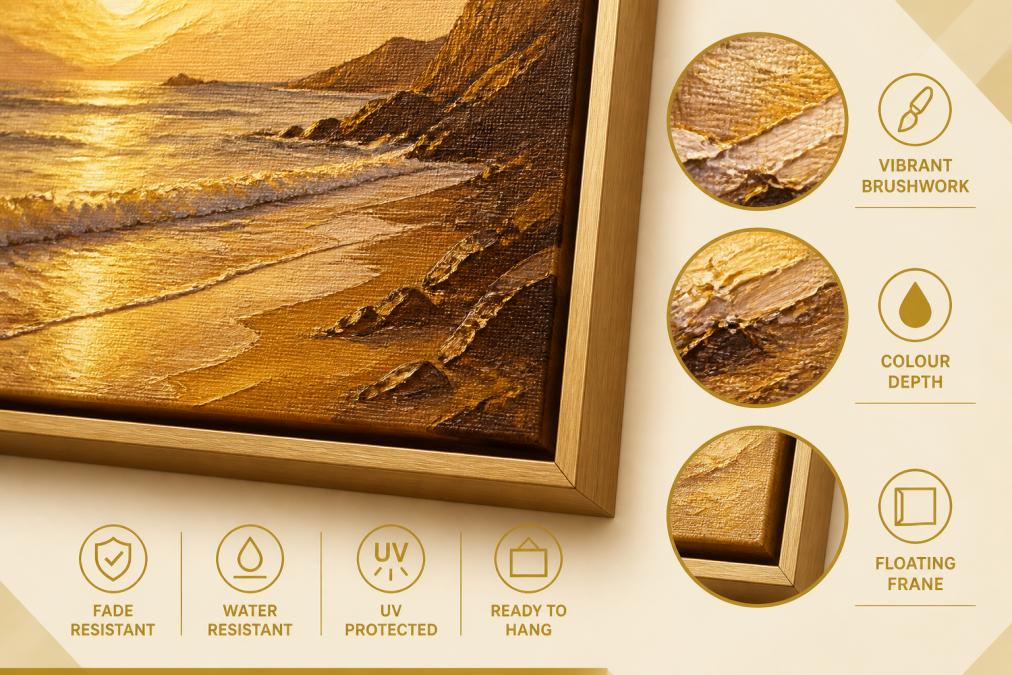
Canvas prints are created by printing an image onto canvas, typically a poly-cotton blend, and stretching it over a wooden frame. The result is a finished, ready-to-hang piece requiring no additional framing. Canvas prints offer durability, resistance to fading when printed with UV-protective inks, and visual depth through canvas texture. The matte or satin finish reduces glare, making the artwork visible from various angles and lighting conditions.
Fine art prints are created by printing onto archival-quality paper using professional-grade inks. These prints often require framing behind glass, which protects the paper and completes the presentation. Fine art prints offer a refined aesthetic and excel at reproducing subtle colour gradations and fine detail.
Quality matters significantly in both formats. High-quality canvas prints use fade-resistant inks, archival-grade canvas, and solid wooden frames. Budget canvas prints may use thinner canvas, lower-quality inks, or flimsy frames that warp over time. Similarly, fine art prints on genuinely archival paper with professional inks will outlast prints made with standard office paper and consumer-grade inks.
The cost difference is substantial. Canvas prints typically cost £60-£100, while a comparable fine art print with framing could exceed £150-£200. This price advantage makes canvas prints accessible for homeowners who want multiple pieces or who are hesitant to invest heavily in artwork they haven't seen in person.
Maintenance differs between formats. Canvas prints require occasional dusting and can be cleaned gently with a soft, dry cloth. Fine art prints behind glass need glass cleaning and periodic frame checks. Canvas prints are generally lower-maintenance.
The choice between canvas and fine art prints often comes down to aesthetic preference and practical considerations. Canvas prints suit contemporary and modern décor schemes and work well in rooms where you want a finished, gallery-like appearance without the expense of framing.
Price Points and Accessibility in Landscape Art
Landscape art exists at multiple price points, from budget-friendly prints to investment-level originals.
Open-edition canvas prints and posters cost £20-£80. These are mass-produced, so per-unit cost is low. You can experiment with different styles without significant financial commitment, though thousands of other people own identical copies.
Limited edition prints typically cost £80-£300. These are produced in a defined quantity, often 100 to 500 copies, and numbered accordingly. Limited editions offer more exclusivity than open-edition work while remaining accessible to most homeowners.
Original paintings by established landscape artists typically start at £500 and extend into thousands of pounds, depending on the artist's reputation, the painting's size, and the gallery handling the sale. Custom landscape art falls into a separate category, typically costing £300-£1,500 depending on the artist's experience and commission complexity.
paints2prints canvas prints range from £59-£119, positioning them in the accessible middle ground. This pricing makes it feasible to own multiple pieces, allowing you to create a cohesive gallery wall or distribute artwork across several rooms. The quality, poly-cotton blend canvas, UV-protective inks, and wooden frames exceed what you'd find at the lowest price points.
Geographic diversity in landscape art affects pricing. Work depicting well-known locations often commands higher prices because of built-in appeal. Landscape art depicting less famous but equally beautiful areas may be underpriced relative to quality, offering good value for those willing to explore beyond iconic subjects.
Conclusion
Exploring landscape art alternatives opens up possibilities beyond established gallery names. Contemporary landscape painters, diverse artistic approaches to seascapes and coastal themes, and accessible online retailers have democratised access to quality artwork. Whether you choose canvas prints from paints2prints, with their UV-protective inks, poly-cotton blend canvas, and free UK and EU shipping, or pursue original paintings from emerging artists, the key is matching the work to your space, your aesthetic, and your budget. Take time to assess your room's colour palette and lighting, consider whether you prefer canvas or fine art prints, and explore artists and styles beyond the familiar names. The landscape art market has never offered more choice, and that choice is your advantage.
Frequently Asked Questions
What makes a good landscape art alternative to traditional gallery pieces?
A strong landscape art alternative combines authentic artistic interpretation with accessibility. Look for pieces that capture genuine atmosphere through vibrant colour palettes and skilled brushwork. Canvas prints using UV-protected inks, like those with poly-cotton blends and water-based inks, ensure your investment lasts without fading. Quality alternatives offer the visual storytelling of original paintings but at price points suited to homeowners decorating their living spaces, typically ranging from £59 to £119.
How do I choose art for my home that suits my space?
Start by considering your room's lighting, colour scheme, and dimensions. Measure your wall space and note the dominant tones in your furnishings. For coastal landscapes, cooler blues and greys work well in modern interiors, while warmer sandy tones suit traditional settings. Test how a print looks by viewing it from different distances and times of day. Customisable sizes and framed or unframed options let you tailor the piece to your exact space. Free returns or exchanges give you confidence if the dimensions don't work as expected.
What's the difference between buying original landscape art online versus prints?
Original paintings are one-of-a-kind works with unique brushwork and texture, commanding higher prices and investment potential. Fine art prints and canvas prints offer the same visual appeal and artistic expression at a fraction of the cost, making them ideal for renters or those furnishing new spaces. High-quality canvas prints use archival inks and durable materials that resist fading and warping. Both deliver authentic artistic inspiration and scenic compositions; the choice depends on your budget, space permanence, and whether you value collectible heritage or accessible visual transformation.
Are landscape canvas prints durable enough for long-term display?
Quality landscape canvas prints are designed for durability. Look for poly-cotton blend canvases with matte or satin finishes, rated to resist scratching, cracking, and warping. UV-protected water-based inks preserve vibrant colour palettes for years without fading. Wooden stretcher frames from renewable sources provide structural stability, and floating frames with pre-installed hardware make hanging simple and protect your walls. Most high-quality prints maintain their appearance for a decade or more with normal indoor display, making them a reliable choice for permanent home decor.
Where can I find affordable contemporary landscape paintings or prints?
Online retailers specialising in printed landscape art offer the best combination of quality and value. Canvas print specialists provide customisable sizes, framed or unframed options, and competitive pricing. Look for retailers offering free shipping, which significantly reduces overall cost. Pieces like 'Cornish Coast: Ocean Art Canvas Print' at £69 or 'Twilight on the River Blackwater' at £59 deliver contemporary artistic technique and vibrant colour without the premium gallery markup. Check customer reviews and return policies to ensure you're purchasing from reputable sources that stand behind their quality.
This article was written using GrandRanker
0 comments