

Table of Contents
- Assess Your Living Room Space and Light
- Select the Right Size for Your Coastal Wall Art
- Best Coastal Colour Schemes for Living Rooms
- Placement and Hanging Height Guidelines
- How to Arrange a Gallery Wall with Coastal Prints
- Coastal Living Room Decor Ideas Beyond Wall Art
- Choosing Between Framed and Unframed Options
- Quality and Longevity: What to Look For
Last Updated: August 7, 2026
Assess Your Living Room Space and Light
Before selecting coastal wall art, understand your space's dimensions, natural light patterns, and existing colour scheme. These factors determine which pieces will work.
Examine how light moves through your living room throughout the day. North-facing rooms receive consistent but softer light; south-facing spaces get warmer, brighter light that shifts how colours appear on canvas. East and west-facing rooms experience dramatic changes in light intensity. Coastal art's blues, greens, and sandy tones look completely different depending on the light they receive.
Walk around your living room at different times and observe which walls catch the most light. Pieces in bright, direct sunlight may appear washed out without archival-quality canvas. Art in shadowy corners needs sufficient ambient light to be visible.
Consider room size as well. Small living rooms (under 4 metres wide) feel cramped with oversized art, while spacious open-plan areas carry larger statement pieces. Understanding visual weight, how much impact a piece has relative to its wall, is essential.
Select the Right Size for Your Coastal Wall Art
Getting size right prevents common mistakes. Too small, and the piece disappears; too large, and it dominates unbalancedly. The right size creates a focal point without overwhelming the space.
The 2/3 Rule for Wall Proportions
Measure the wall width where you plan to hang the piece. Your art should occupy approximately two-thirds of that width. If your wall is 3 metres wide, aim for art roughly 2 metres wide. This creates balanced visual relationship between artwork and surrounding wall space while leaving enough negative space for the piece to breathe.
The 2/3 rule also applies to height. If your wall is 2.4 metres tall, your art should ideally be around 1.6 metres tall. Standard canvas sizes don't always align perfectly, so treat the rule as a guide rather than rigid formula.
Measuring Above Your Sofa
If hanging art above a sofa, your coastal wall art should be 75 to 80 per cent of the sofa's width. A 2.4-metre sofa pairs well with art roughly 1.8 to 1.9 metres wide. This proportional relationship creates visual coherence, anchoring the art to furniture below rather than floating randomly.
Leave 30 to 45 centimetres of wall space on either side of the art for a balanced look. The vertical distance between the sofa top and art bottom should be roughly 15 to 20 centimetres, large enough to feel intentional but small enough that art and sofa read as unified composition.
Best Coastal Colour Schemes for Living Rooms
Coastal colour schemes reflect natural beach palettes and feel calming. Understanding which colours work together helps you select art that enhances rather than clashes with your existing interior.
Muted Palettes and Natural Tones
The most effective coastal schemes use muted, desaturated blues, greens, and greys. Think sea-glass greens rather than bright emerald, chalky blues instead of vibrant navy, and misty greys that feel soft rather than stark. These colours appear in nature, weathered driftwood, sea glass, overcast skies, which is why they feel authentically coastal.
Muted palettes are forgiving. A room painted in soft, chalky blue pairs easily with art in similar tones. Colours don't compete; instead, they create cohesive visual experience. Layering pieces in slightly different shades of blue and grey adds depth without jarring contrasts.
Natural textures amplify this effect. Incorporate driftwood tones, linen whites, and sandy beiges alongside blues and greens. These warmer neutrals prevent coastal schemes from feeling cold. A living room with pale blue walls, grey upholstery, and sandy wooden furniture creates balanced, inviting space that coastal wall art enhances naturally.
Matching Your Existing Interior
Inventory your living room's existing colours: dominant wall colour, sofa colour, rug tones, and accent colours. Your coastal wall art should echo at least one existing colour while introducing subtle new tones that feel intentional.
If your living room is predominantly neutral, coastal art in soft blues and greens becomes sophisticated accent adding visual interest without clashing. If your space already features blue walls or upholstery, art in complementary greys, greens, or sandy tones prevents monochromatic feeling.
Look for art containing multiple colours from your existing palette. A piece featuring blue water, grey rocks, and sandy beach tones ties together a room with blue walls and grey furnishings more effectively than single-colour art, creating visual continuity.
Placement and Hanging Height Guidelines
Where you hang coastal wall art matters as much as what you choose. Incorrect placement makes even beautiful pieces feel awkward or disconnected.
The standard rule is hanging art at eye level, with the centre roughly 1.5 metres from the floor. However, if your seating area is the primary vantage point, adjust hanging height based on where people view the piece from.
When art hangs above a sofa, the bottom edge should sit 15 to 20 centimetres above the sofa back. This creates visual connection without making the piece feel cramped. The relationship between art and sofa becomes part of overall composition.
For gallery walls, maintain consistent spacing between frames, typically 5 to 8 centimetres. Less spacing feels cramped; more feels scattered. Use painter's tape to map out arrangements before hanging anything.
How to Arrange a Gallery Wall with Coastal Prints
A gallery wall featuring multiple coastal prints creates visual interest and tells a more complex story than a single statement piece.
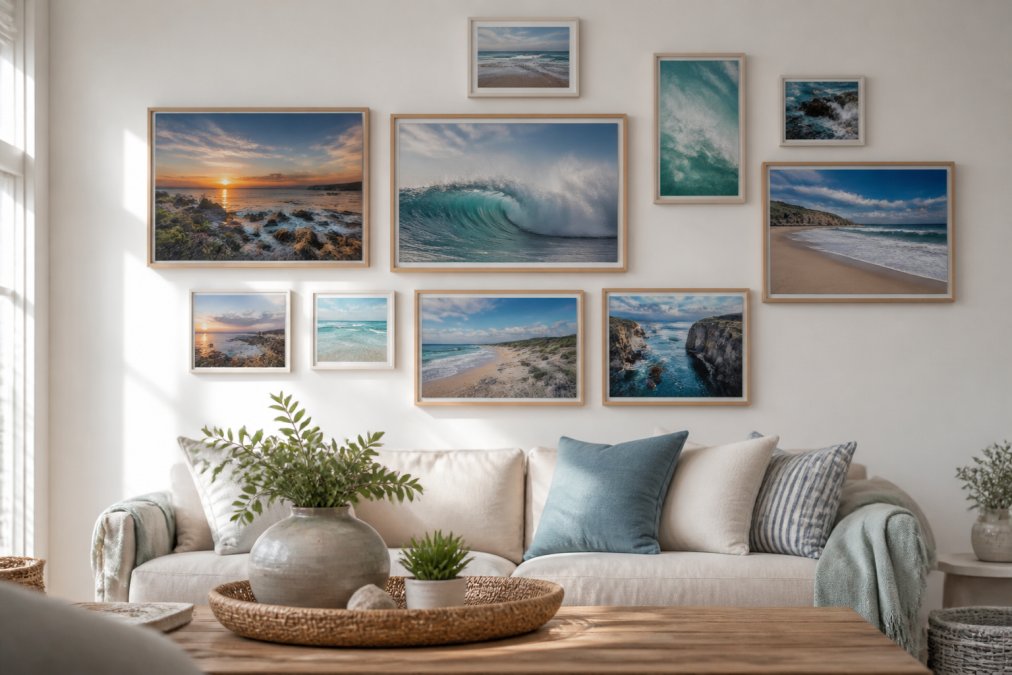
Select pieces sharing visual connection: similar colour palettes, related subject matter, or complementary styles. Five to seven pieces typically work well for most living room walls. Fewer feels sparse; more than seven often feels chaotic unless the wall is very large.
Lay all pieces on the floor and arrange before hanging. This allows experimentation without damaging walls. Try symmetrical grid arrangement for formal, structured look, or asymmetrical layout for dynamic, organic feel.
Creating Visual Balance and Negative Space
Visual balance doesn't mean every piece is identical. Distribute visual weight evenly across the arrangement. If you have one large, dark piece, balance it with several smaller, lighter pieces rather than clustering all large pieces on one side.
Negative space, empty wall between and around frames, is as important as the art itself. Without adequate negative space, a gallery wall feels cluttered. Aim for at least 5 to 8 centimetres between frames, allowing each piece to breathe while maintaining visual connection.
When arranging coastal prints, consider how colours and subjects interact. A piece featuring stormy grey skies feels heavy; balance it with lighter, brighter pieces showing sandy beaches or clear water. This tonal variation prevents monotonous feeling.
Mixing Framed and Unframed Pieces
Combining framed and unframed canvas art creates visual variety and curated sophistication. Unframed canvas offers modern, minimalist aesthetic, while frames add formality and structure.
When mixing framed and unframed pieces, maintain visual consistency through colour and spacing. Stick to one or two frame colours throughout, natural wood tones and black work classically with coastal aesthetics. Too many frame colours create visual chaos.
Unframed canvas works particularly well in contemporary coastal living rooms. Clean edges and lack of frame create simplified, current, intentional look. paints2prints offers both framed and unframed options, allowing customization to match aesthetic preferences. Their customizable sizes let you create gallery walls fitting specific wall dimensions perfectly.
Coastal Living Room Decor Ideas Beyond Wall Art
Wall art is the focal point, but surrounding décor amplifies its impact. Beautiful coastal wall art exists in context, textures, lighting, and accessories shape how viewers experience the piece.
Layering Textures and Materials
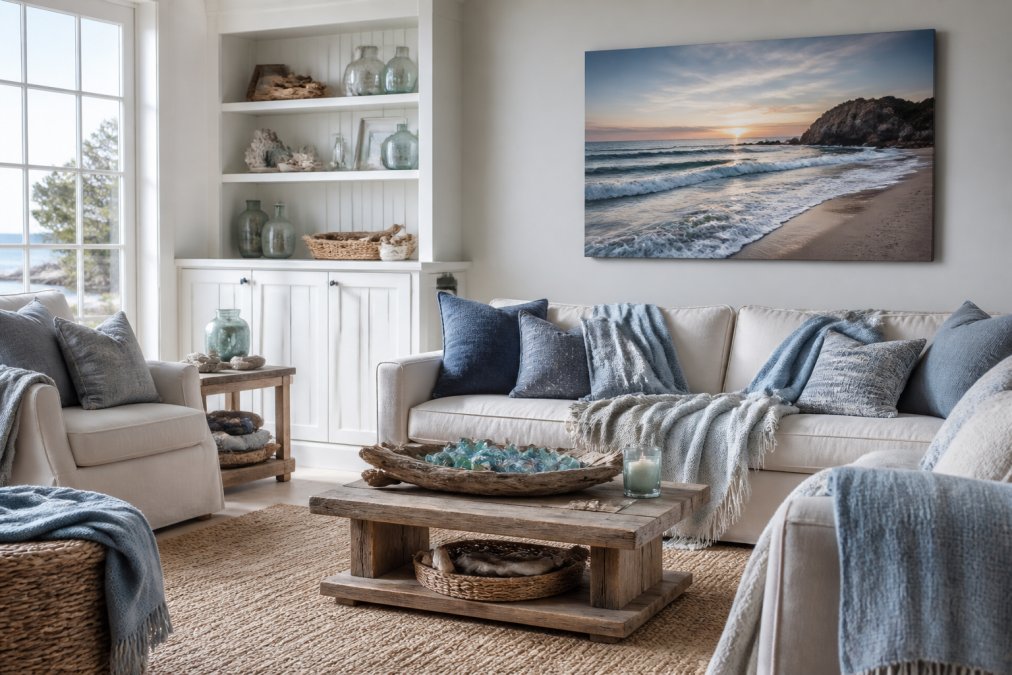
Coastal aesthetics thrive on texture. Smooth canvas art benefits from surrounding textures echoing natural beach materials. Incorporate linen, jute, weathered wood, and soft wool through upholstery, rugs, and accessories.

A linen sofa in cream or soft grey pairs beautifully with coastal wall art. The fabric's natural texture and neutral tone create calm backdrop letting art shine. Layer in a jute rug under the sofa; its organic texture reinforces coastal theme. Add wool throw blankets in soft blues or greys draped over sofa arm.
Wooden side tables in natural or driftwood finishes anchor the space in coastal aesthetics. Slight variations in tone and finish feel authentic and collected. Woven baskets, ceramic vessels, and glass accessories add textural layers without overwhelming.
Lighting and Ambience
Right lighting transforms coastal wall art from daytime feature into evening focal point. Avoid harsh overhead lighting, which creates unflattering shadows and makes colours appear artificial. Layer multiple light sources instead.
Install picture lights above or below your art to illuminate it after dark. These subtle lights draw attention to the piece and create ambience. Wall sconces flanking the art create balanced, directional light flattering to both art and room.
Table lamps on side tables provide warm, ambient light complementing coastal aesthetics. Choose lamps with linen or cotton shades in neutral tones. The warm glow combined with cool coastal art tones creates visual interest and depth.
Position art where it receives indirect natural light rather than harsh direct sun, preventing fading and ensuring true colours throughout the day. Sheer curtains help diffuse bright sunlight while maintaining coastal aesthetic.
Choosing Between Framed and Unframed Options
The decision between framed and unframed coastal wall art depends on aesthetic preferences, budget, and the specific look you're achieving.
Unframed canvas prints offer modern, minimalist aesthetic. Clean canvas edges are part of the design. This works particularly well in contemporary coastal living rooms or minimal décor spaces. Unframed pieces feel lighter and more open, making rooms feel larger. They're typically less expensive than framed options.
Framed prints add formality and structure. A frame draws clear boundary around art, creating visual separation from the wall. This works well in traditional or eclectic coastal living rooms. Frames protect canvas edges and hide imperfections, while matching frames to existing furniture or décor.
Consider your wall colour when deciding. Light-coloured walls handle either framed or unframed art. Darker walls often benefit from frames, creating visual definition preventing art from disappearing. If unsure, unframed canvas offers flexibility, you can always add a frame later.
paints2prints offers both options, letting you choose based on specific needs. Their customizable sizes and frame choices create exactly the look you're envisioning, whether sleek, modern unframed canvas or classic framed piece anchoring your coastal living room.
Quality and Longevity: What to Look For
Investing in quality coastal wall art means pieces look beautiful for years rather than fading within months. Several factors determine whether art maintains appearance and integrity over time.
Canvas material matters significantly. Look for poly-cotton blend canvas rather than pure cotton or synthetic alternatives. Poly-cotton blends offer durability, fade resistance, and pleasant finish feeling substantial. Weave should be tight and even; loose, uneven weaves indicate lower quality.
Ink quality determines colour longevity and vibrancy. Archival-quality inks resist fading far better than standard commercial inks, especially in humid environments or rooms with significant natural light. Near-coast or humid climates make archival inks even more important, as moisture and salt air accelerate fading.
The printing process affects final appearance. Giclee printing, a high-quality digital method, produces superior colour accuracy and detail compared to standard inkjet printing, creating museum-quality prints maintaining appearance over decades.
Consider the finish as well. Matte finishes feel sophisticated and reduce glare, making art easier to view from different angles. Satin finishes offer subtle sheen adding depth without reflectiveness. Glossy finishes feel plasticky and suit coastal aesthetics less.
For rooms with significant humidity or temperature fluctuations, mounting and framing become important protective factors. Proper mounting prevents moisture accumulation behind canvas. Quality frames with UV-protective glass or acrylic provide additional fade protection.
paints2prints uses poly-cotton blend canvas with archival-quality inks, ensuring coastal wall art pieces maintain appearance for years. Their pieces like the Cornish Coast: Ocean Art Canvas Print at £69.00 represent excellent value for archival-quality art. The matte/satin finish reduces glare while maintaining colour vibrancy, and free shipping to the UK and EU makes investing in quality art accessible.

Choosing coastal wall art for your living room combines understanding your space, selecting appropriate sizes and colours, and arranging pieces thoughtfully. Best approach combines practical guidelines like the 2/3 rule and proper hanging height with personal aesthetic preferences. Quality matters; archival-quality canvas and inks ensure investment maintains beauty over time. paints2prints offers customizable, high-quality coastal prints tailored to specific spaces, with framed or unframed options and free UK and EU shipping. Start by assessing your room's light and dimensions, then select pieces echoing existing colour palette while introducing calm, cohesive tones making coastal aesthetics appealing.
Frequently Asked Questions
What is the 2/3 rule for wall art?
The 2/3 rule means your coastal wall art should occupy approximately two-thirds of the wall space above your sofa or furniture. This creates visual balance without overwhelming the room. For a standard sofa, aim for artwork that is roughly 60-75% of the sofa's width. This proportion works across most living room layouts and helps establish a strong focal point without leaving the wall feeling bare or cluttered.
How do I choose the right size wall art for my living room sofa?
Measure your sofa width and aim for art that is 60-75% of that measurement. For a 2-metre sofa, choose a piece around 1.2-1.5 metres wide. Hang the centre of your artwork at eye level, roughly 150-160 centimetres from the floor. If using multiple pieces in a gallery wall, maintain consistent spacing of 5-10 centimetres between frames. This sizing approach ensures your coastal wall art becomes a statement piece without appearing disproportionate to your furniture.
What are the best colour palettes for coastal living room art?
Muted coastal palettes work best: chalky blues, misty greys, driftwood tones, and sea-glass greens. These colours create a tranquil atmosphere and complement most living room finishes. If your walls are neutral (white, cream, or soft beige), choose art with deeper blues or greens for contrast. If your walls are already coloured, select art that echoes one accent colour from your palette to maintain interior balance. Avoid overly bright or saturated hues, coastal aesthetics favour understated, natural tones that evoke the seaside.
Should coastal wall art be framed or unframed?
Unframed canvas prints work well for renters and those seeking a modern, minimalist coastal look. Framed options add formality and protect your art from dust and humidity. For coastal prints, box canvas (unframed with wrapped edges) offers durability and a clean aesthetic. If you choose framing, timber or natural wood frames enhance the coastal feel. Consider your living room style: unframed suits contemporary spaces, while framed pieces suit traditional or eclectic interiors. Both options from paints2prints are archival quality and designed to last.
This article was written using GrandRanker
0 comments