

Table of Contents
- Choose Art That Reflects Your Personal Style
- Determine the Right Scale and Proportion for Your Space
- Master Colour Palette Coordination
- Find the Best Height for Wall Art
- Create a Gallery Wall Layout Ideas That Works
- Learn How to Frame Art Prints for Maximum Impact
- Renter-Friendly Installation and Art Maintenance
- Lighting Your Artwork and Creating Atmosphere
Last Updated: August 5, 2026
Choose Art That Reflects Your Personal Style
The foundation of decorating with art starts with understanding what speaks to you. Your home should feel like an extension of who you are, not a showroom of trending pieces that leave you cold.
Before shopping, identify what genuinely resonates. Are you drawn to coastal landscapes, abstract compositions, or wildlife imagery? Do muted tones calm you, or do you need vibrant colour to feel energised? Gather inspiration by creating a Pinterest board, saving images from Instagram, or visiting local galleries to note which pieces make you pause.
A common mistake is choosing art based on what matches your sofa or what's fashionable. Instead, prioritise pieces that align with your aesthetic and the mood you want to create. If you're drawn to nature and coastal themes, lean into that authenticity rather than forcing yourself into a minimalist aesthetic because it's on trend.
paints2prints specialises in curated coastal and landscape canvas art designed for homeowners seeking distinctive pieces that reflect their personal taste. Their collection includes everything from serene seascapes to dramatic wave studies, allowing you to select prints that genuinely match your style.

Determine the Right Scale and Proportion for Your Space
Getting the scale and proportion right transforms a room. A print that's too small disappears against the wall; one that's too large overwhelms the space. The relationship between your artwork and the wall it occupies determines whether the piece becomes a focal point or feels awkwardly placed.
A practical rule is to cover between 50-75% of the wall space available in your chosen area. For a single large print above a sofa, aim for a piece that's roughly two-thirds the width of the furniture beneath it. In a small bedroom, a 60cm × 80cm canvas creates impact without overwhelming the space. In a spacious living room, you might go larger at 80cm × 120cm or even 100cm × 150cm.
Consider negative space around your artwork. Hanging a print too close to other elements or filling every inch of wall creates visual chaos. Strategic spacing allows each piece to breathe and prevents the space from feeling cluttered.
paints2prints offers customisable print sizes, so you can order exactly the dimensions that suit your space rather than compromising with standard offerings.
Master Colour Palette Coordination
Your colour palette ties your decorating with art to the rest of your interior scheme. This doesn't mean every colour in your artwork must match your walls, but rather creating a cohesive relationship between the print and the surrounding environment.
Start by identifying your room's dominant colours, wall colours, furniture tones, or large textiles like curtains or rugs. Your artwork should either complement these colours or introduce a new accent that feels intentional. A coastal print with blues and greens works naturally in a room with neutral walls and wooden furniture.
Colour psychology matters too. Cool tones like blues and greens create calm, restful atmospheres ideal for bedrooms. Warmer tones energise living areas and social spaces. Your art should reinforce the mood you want each room to convey.
One approach is to let your artwork introduce colour rather than match it exactly. A vibrant seascape with jewel tones can work beautifully against neutral walls, becoming the colour story for the entire room.

Find the Best Height for Wall Art
The best height for wall art is eye level, which typically means the centre of your artwork should sit at approximately 1.5 metres from the floor. This is the natural focal point where viewers' eyes naturally rest.
However, context matters. Above a sofa, you might hang art slightly higher to account for the furniture's height and viewing angle when seated. Above a console table or desk, eye level remains the standard. The relationship between your artwork and nearby furniture affects perception of height.
When hanging multiple pieces, maintain consistent spacing and alignment. Staggered arrangements can work beautifully, but each piece should feel intentionally placed rather than randomly scattered.
For renters concerned about installation, many pieces can be hung using damage-free solutions like picture hanging strips and adhesive hooks, allowing you to display art without making permanent changes to walls.
Create a Gallery Wall Layout Ideas That Works
A gallery wall transforms negative space into a curated display that reflects your personality and aesthetic. The key is balancing visual weight, spacing, and composition so the arrangement feels cohesive rather than chaotic.
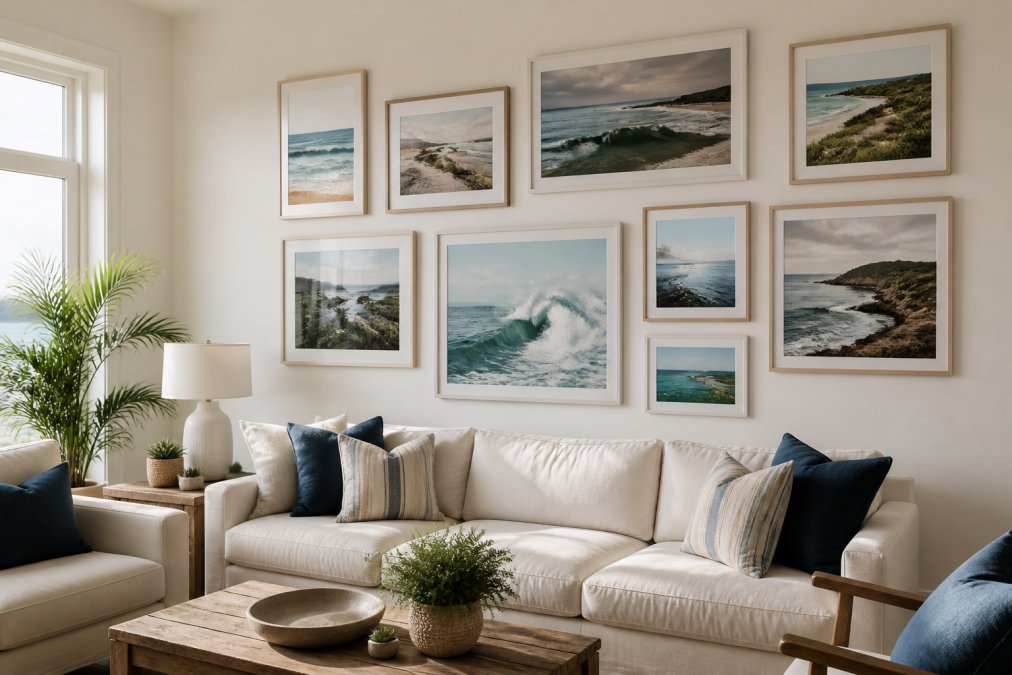
Start by planning your layout before hanging anything. Lay all your pieces on the floor or a large table and arrange them until the composition feels balanced. Odd numbers of pieces, 3, 5, 7, typically create more dynamic compositions than even numbers. Vary the sizes of your prints and frames to create visual interest.
Spacing is crucial. Most designers recommend 5-10 centimetres between frames for a cohesive gallery wall. This consistent spacing creates rhythm and prevents the arrangement from feeling cramped or too spread out.
Consider your colour palette across the entire arrangement. You might use frames in consistent finishes while varying artwork styles, or alternate between coloured and neutral frames. The goal is creating intentional variety rather than accidental mismatches.
paints2prints allows you to order multiple prints in coordinating styles and colours, making it simpler to create a cohesive gallery wall without hunting across different retailers.
Learn How to Frame Art Prints for Maximum Impact
Framing decisions significantly affect how your artwork functions in a room. The frame isn't merely protection; it's a design element that either elevates your print or diminishes its impact.
For coastal and landscape art, simpler frames often work best. Natural wood frames complement organic subjects like seascapes and nature photography. Black or dark frames create drama and work well with bold, high-contrast imagery. White frames offer a clean, contemporary look that suits minimalist spaces.
Consider the frame's visual weight relative to your artwork. A delicate, narrow frame suits detailed prints with intricate composition. Bolder artwork can carry a thicker, more substantial frame without being overwhelmed.
Matting serves both practical and aesthetic purposes. A quality mat protects your print from direct contact with glass and creates visual separation between the image and frame. Neutral mat colours work universally, while coloured mats can introduce an accent colour that ties your artwork to the room's palette.
paints2prints offers both framed and unframed options, giving you flexibility to choose based on your space and preferences. Their framed prints come ready to hang, eliminating the need to commission custom framing.
Renter-Friendly Installation and Art Maintenance
Renters often hesitate to decorate with art, fearing damage to walls or conflicts with landlords. However, damage-free installation methods allow you to display artwork beautifully without compromising your deposit.
Picture hanging strips are your primary tool. These adhesive strips hold substantial weight and remove cleanly without damaging paint or plaster. Command strips, in particular, are reliable for canvas prints up to 5 kilograms. For heavier pieces, small picture hooks and finishing nails create minimal holes that are easily patched with standard wall filler.
Before installation, take photographs of your walls in their original condition. This documentation protects you if disputes arise about pre-existing damage. When you move out, repair any holes and remove adhesive residue carefully to restore walls to their original state.
Art maintenance preserves your investment. Dust canvas prints gently with a soft, dry cloth every few months. Avoid touching the surface directly, as skin oils can accumulate over time. For framed prints, clean glass with a microfibre cloth and appropriate glass cleaner.
Sunlight fading is a genuine concern for long-term preservation. Rotate prints annually if they're exposed to direct sun, or position artwork away from windows receiving intense afternoon light.
Lighting Your Artwork and Creating Atmosphere
Proper lighting transforms how your artwork is perceived and experienced. The same print can look dramatically different depending on how light interacts with it.
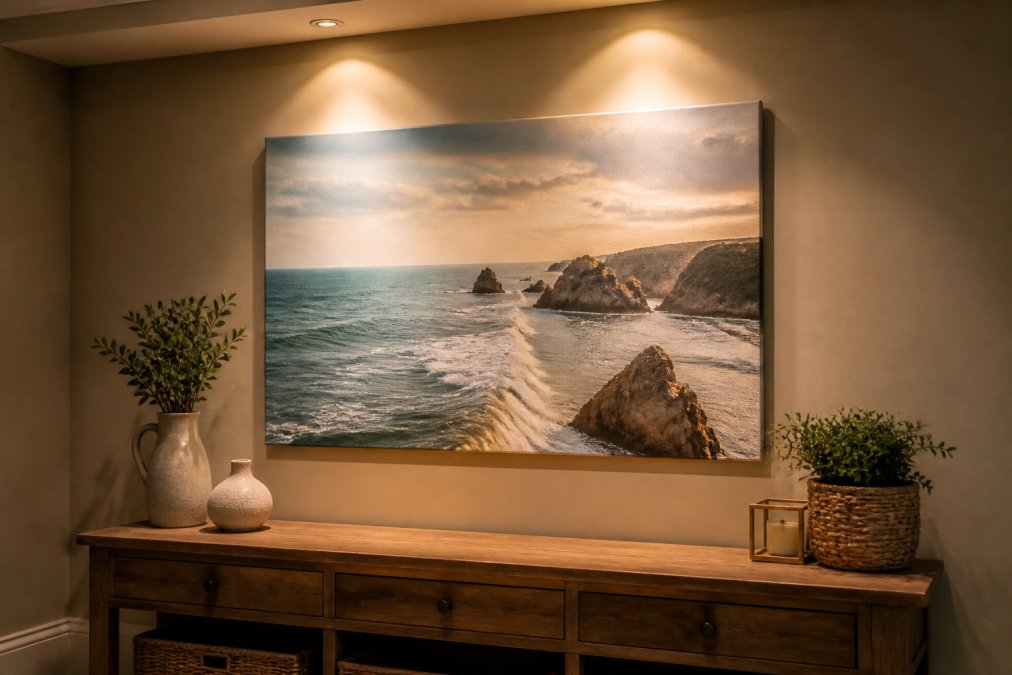
Directional accent lighting is the gold standard for artwork display. Picture lights mounted above or below a frame direct light specifically onto the print, highlighting detail and creating visual emphasis. These lights should be positioned so light falls evenly across the entire image without creating harsh shadows or reflections.
Ambient room lighting also affects artwork visibility. A print in a dark corner with minimal surrounding light becomes visually recessive. Balance your artwork's lighting with the room's overall illumination to ensure it receives appropriate visual weight.
Warm lighting (2700K-3000K colour temperature) creates intimate, welcoming atmospheres ideal for living spaces and bedrooms. Cool lighting (4000K+) suits contemporary, energetic spaces. The colour temperature of your lighting should complement both your artwork and your room's intended mood.
Avoid placing artwork directly opposite windows or bright light sources, as this creates backlighting that makes the print appear darker and less vibrant. Indirect natural light combined with supplementary accent lighting typically produces the most flattering results.
Decorating with art transforms your living space from functional to personal. The process requires thoughtful consideration of style, proportion, colour, and placement, but the reward is a home that genuinely reflects who you are.
Start with art that speaks to you, ensure it's appropriately scaled for your space, coordinate colours thoughtfully, and install it at eye level where it creates maximum impact. For renters, damage-free installation methods remove the barrier to displaying beautiful artwork.
paints2prints makes this process accessible with high-quality coastal and landscape canvas art available in customisable sizes and finishes. Their free shipping to the U.K. and E.U., combined with options for framed or unframed prints, means you can find exactly what your space needs without compromise. Browse their collection and add a piece that transforms your walls into a reflection of your personal style.
| Consideration | Key Point | Impact |
|---|---|---|
| Personal Style | Choose art that genuinely resonates with you | Creates authentic, lasting satisfaction |
| Scale & Proportion | Cover 50-75% of wall space | Prevents artwork feeling too small or overwhelming |
| Colour Coordination | Complement existing palette or introduce intentional accents | Ensures visual cohesion throughout the room |
| Hanging Height | Centre artwork at approximately 1.5 metres | Positions art at natural eye level for optimal viewing |
| Gallery Walls | Maintain 5-10cm spacing between frames | Creates rhythm and prevents cluttered appearance |
| Framing | Match frame style to artwork and room aesthetic | Elevates presentation and protects investment |
| Renter Installation | Use damage-free strips and hooks | Allows beautiful display without deposit concerns |
| Lighting | Combine accent lighting with ambient illumination | Highlights detail and creates atmospheric impact |
Frequently Asked Questions
What is the standard eye-level rule for hanging art?
A common guideline for determining the best height for wall art is to aim for the centre of your artwork to sit at approximately 1.5 metres from the floor. This aligns with eye level for most adults and creates visual balance. For gallery walls or multiple pieces, use this as your anchor point and arrange other artwork around it. This spacing works well in living rooms, hallways, and bedrooms where you want art to feel intentional and accessible.
How do I choose the right size art for my wall space?
Use the two-thirds rule: your artwork should occupy roughly two-thirds of the wall space above furniture. For a sofa, select art that spans 50-75% of the furniture's width. Measure your wall carefully before ordering, paints2prints offers customisable print sizes so you can match your exact space. If you're unsure, order a smaller piece first; you can always add complementary artwork around it to create balance and fill negative space effectively.
Can I decorate with art as a renter without damaging my walls?
Yes, renters have several damage-free options. Use damage-free adhesive strips rated for canvas weight, or opt for lightweight framed prints that reduce wall stress. Command strips and similar products are specifically designed for rental properties and leave no marks when removed properly. Alternatively, lean artwork against the wall for a temporary, stylish look. Always check your tenancy agreement first. For more permanent solutions, discuss with your landlord, many are open to non-invasive hanging methods that enhance the property.
How do I mix different styles of art and mediums in one room?
Create cohesion through colour palette and scale rather than matching styles exactly. Choose a dominant colour (such as coastal blues or warm earth tones) and select artwork that echoes it, even if the pieces differ in style or medium. Mix framed and unframed prints, canvas and paper, the key is intentional spacing and balance. Vary the orientation (portrait and landscape) and use negative space strategically. This layering approach prevents visual clutter while creating an interesting, curated aesthetic that feels personal and sophisticated.
This article was written using GrandRanker
0 comments